Thursday, 5 July 2012

INDEVOURS is making a splash!

I'm excited to share this inspiring new video from INDEVOURS, which will tell you a bit about why my classmates and I are so passionate about international development, and what we hope to learn and do during our field placements this year!


What is INDEVOURS? 
We are a group of thirty-two diverse university students heading to seven different countries around the world in search of ways to make a positive difference in the realities of international development.

Our vision
INDEVOURS seeks to shape the world by creating lasting, meaningful change in the fields of environment and development. We strive to empower and increase the capacities of others by building resilience, equality, freedom, and opportunities.

How can YOU support our vision?
  • Keep in touch by subscribing to my blog, where I will be journaling about my adventures in Peru! You can also check out the INDEVOURS blog, and the blogs of all my classmates!
  • Spread the word by following us on facebook and twitter!
  • Come out to our events! We'd love to see you at our upcoming Global Gala, and Farewell Concert (information to come)!
  • Donate! We're working hard for change this summer! Our goal is to fundraise $60,000 (thats $1,800 per student) to support our unpaid volunteer placements, and any bit helps - $5, $50, or $500! Here's how you can support us

Thanks!
Laura

Sunday, 1 July 2012

My 59 Cents

Red and white Canada Day beads - 44¢
Canadian flag pins - 37¢
Patriotic paper plates - 50¢

A year of health care for refugee claimants in Canada - PRICELE--No. Just 59¢. 


On July 1st, Canadians have a lot to celebrate.  We express our gratitude for living in a country in which most of our basic needs are taken care of, and in which we are treated as equals. These ideals converge in the provision of universal health care, which is perhaps the greatest source of national pride for Canadians.

But what many Canadians don't realize is that today, when we should be celebrating our equal rights to health care, the government is refusing to provide full health care coverage for refugee claimants in Canada. This country used to be seen as a safe haven for people escaping violence, famine, and oppression all over the world.  Refugees could come here and receive prescription drugs, prosthetic limbs, dental and vision care, and other essential medical services through the Canadian Interim Federal Health Program (IFHP).  In 2011, 25,000 refugees were living in Canada. But on June 30th, all refugee claimants lost their supplemental benefits, and any refugees coming from countries on the government's so-called "safe" country list were no longer entitled to any health care coverage at all (unless, of course, their condition threatened the rest of our health).

The reason? The government claims that these cuts will save Canada $100 million dollars over five years.  But this is terribly short-sighted economics, and doctors are speaking out about it.  Canadian Doctors for Refugee Care states that "Cutting preventative and primary health care is poor health care policy that threatens public safety and increases costs to taxpayers."  Furthermore, they believe that the cuts are "unjust and counter to Canada's long history of compassion and openness."  

Even if it will save us $20 million a year, a group of students at Canadian Mennonite University has calculated that this only amounts to 59¢ per person. Is it worth is to you? It certainly isn't to me. So this is what we're going to do. We're going to take our 59¢, send it to Stephen Harper, and tell him where he can put it: right back into the Interim Federal Health Program. Because everyone should have access to the healthcare they need, and we have the resources to provide it.


Check out this video, and then join us in sending your spare change (no postage necessary!) to:

The Right Honourable Stephen Harper
Prime Minister of Canada, Office of P.M.
80 Wellington St.
Ottawa, Ontario
K1A 0A2

Thanks!
Laura

Tuesday, 26 June 2012

The Joy of Blogging

Thanks so much to Steph Higgs for nominating me for the Versatile Blogger Award! As with so many good things, it turns out that I have to do something to earn the award :) Here are the rules:

Rules:
  1.      Nominate 15 fellow bloggers who are relatively new to blogging
  2.      Share 7 random facts about yourself

This is a great opportunity to recognize some of the amazing International Development students who I have the privilege of getting to know this summer, both in our St. Paul's residence community, and in the online community. These are people whose bright ideas and passion shine through their thoughtful comments in class and on their blogs:

http://findingdevelopment.wordpress.com/
http://kylamckee.wordpress.com/
http://saida1sheikh.blogspot.ca/
http://dapochronicles.tumblr.com/
http://the-k-movement.tumblr.com/
http://wherehopetakesroot.blogspot.ca/
http://www.jeannette-rouire.blogspot.ca/
http://katelyninburkina.blogspot.ca/
http://nafishasavoice.wordpress.com/
http://adamchagani.com/
http://madihainvietnam.blogspot.ca/
http://dangoesperusing.blogspot.ca/
http://ginavukojevic.blogspot.ca/
http://www.heatherramshawtravels.blogspot.ca/
http://kevinmcgregorsblog.blogspot.ca/

And those are just a few! Check out the INDEVOURS blog for the whole enchilada! (I'm practicing my Spanish :)

And for the second part of the award, here are 7 facts about myself:

1. I have lived in Iowa, West Virginia, Pennsylvania, Ontario, and Quebec! All of these experiences have enriched my life, and I wouldn't take any of them back, but I think I would like to be rooted in one place someday.

2. Luckily, Mennonite culture is transnational. That's probably why I identify with it so strongly. The music, good food, peace theology, and great community are also really cool, and may I say radical?

3. I <3 music. Specifically, folk music--that is, the music that people and communities make themselves. As a fiddler, I love finding other people to play and sing with, and I've found that music is a neat way to build bridges across cultures and languages. I collect songs the way many people collect souvenirs.

4. Tucked away in a notebook, I have secret plans for my dream not-for-profit, community-owned arts, culture & environment centre. *Sigh*. Maybe when I graduate.

5. I speak in English, think in French, and sing in Spanish.  Language has always been a love of mine.

6. I love to read. Working at an indie bookstore for the last 3 years has been an incredible experience, and I'm sad to be leaving in a month!

7. I'm passionate about peace and environmental activism! Since high school, I've organized campaigns on issues ranging from climate change to Iraq War resisters in Canada.

So there you have it! 7 facts about me. But you seem interesting too! Let's talk :)

-Laura-

Wednesday, 6 June 2012

The meeting place

It's one thing to take a course on the history of colonialism. It's quite another to raise your hand and identify yourself as a settler in a room of Aboriginals, and then have people clap for you.

This weekend I had the honour of attending "The Meeting Place" conference in Toronto, where I witnessed firsthand the powerful accounts of survivors of Canada's Indian Residential School System, and observed the complex work of truth and reconciliation.  It was moving and disturbing, and even as I start to write this reflection, I'm not quite sure where it will go...

I'll begin by talking about my reasons for going.  As I work out my personal philosophy on development, I'm realizing that it's about decolonization. It's about alliance and identification with the poor.  It's about solidarity.  I know that these words don't necessarily align with development practice, in which some people ignore the contradiction in getting rich while "serving" the poor.  But to me, social justice involves mutual transformation, and if I'm truly interested in working with marginalized people, I have to start by listening to them, and working to understand their experiences, no matter how uncomfortable I might feel.  I must humbly recognize my own hand in contributing to their challenges, and take responsibility for the harmful actions of my ancestors.  Only then can I engage with them in working toward development--a process of collectively imagining and realizing a third way of peaceful coexistence, equality, and respect.

In September, I'll be travelling to Lima, Peru to work at the Centre for Black Peruvian Women's Development.  It's an exciting opportunity, and I'm looking forward to the experience of living and working in a new culture. But as I learn more about the struggle for Afro-Peruvian rights, and the Peruvian government's failure to make any real changes since their 2009 apology, I am struck by the parallels between the situation of Afro-Peruvians, and the experience of Canada's own Aboriginal peoples.  I cannot exoticize social injustice when it is happening right here where I sit, on First Nations land, which I happen to call "my backyard."  I cannot pretend that development problems only exist in the Global South, or work for Afro-Peruvian rights while closing my eyes to the contaminated water, land theft, and poor education in Aboriginal communities across Canada.  For this reason, I think that learning about historical and contemporary Aboriginal issues in Canada, and working to decolonize myself is an important part of preparing for my work this fall.  It was with these goals in mind that I chose to attend "The Meeting Place" as a representative of the Mennonite Church, which operated three residential schools in Ontario; as a Canadian settler, who continues to occupy First Nations land; and as an ally of my Aboriginal neighbours, who live with the pain of historical wrongs and continued discrimination.

At the banquet on Saturday night, when former National Chief Ovide Mercredi stated his appreciation for the settlers who had come to the conference, and asked us to raise our hands, I admit that I didn't know what to feel.  Clearly, I wasn't the only one, as about half of the Aboriginals in the room began to applaud, and the other half silently wrestled with their true feelings about our presence.  But our struggles, our wounds, and our questioning became our meeting place, as we shared stories and food, and laughed and cried together.  From this meeting place, we were able to take an important first step together.  But as Mercredi reminded us, there is a long road ahead.

 So let's begin a conversation:
  • What are the next steps?
  • How can I continue to take part of the truth and reconciliation process?
  • What does it mean to de-colonize myself?
  • What does it mean to de-colonize development?
  • What does the struggle of Aboriginals in Canada mean for International Development students, and our work abroad?
Please comment with your thoughts, opinions, and ideas!

-Laura-

Wednesday, 23 May 2012

From seed to social enterprise

¡Hola todos! It's been a while. But after a couple weeks of vacation, and a couple more weeks of school (but still pretending I'm on vacation), I'm back up and blogging!

Over the Victoria Day weekend, I had the wonderful opportunity to enjoy some fresh air, and pay some visits to two friends who have just started exciting new green businesses in the Waterloo Region! Let me introduce you.

Rachel Dyck - Gardener extraordinaire, growing ideas from the ground up!

Forget mindless summer jobs. Rachel has something better in mind -- a summer spent learning new skills, helping her neighbours, and taking care of the environment!

Inspired by a conversation with  the University of Waterloo's own Economics professor, Larry Smith, Rachel has launched Gardens to Grow, a budding container gardening business. "Manageable, affordable and sustainable," Gardens to Grow starts vegetable gardens from seed, and sells them for $35 each in ready-to-go containers.  Customers have the choice of 3 different gardens, "Italian Blend," "Summer Salad Bowl," and "Veggie Variety."  Gardens to Grow makes it possible for anyone, even those with no yards or gardening skills, to enjoy garden fresh herbs and vegetables!

Container vegetable gardening is a simple way for urbanites to reduce their food miles and carbon footprints, afford healthier food, and learn about the process of food production! It's a great idea for a growing city like Kitchener-Waterloo. And the people of Waterloo seem to think so too, judging by the number of orders that have been rolling in for Rachel's beautiful bushel baskets. As we've been learning in our social entrepreneurship class, this intersection of supply and demand is the sweet spot for success, and the mark of a true opportunity! I'm inspired by Rachel's vision, and I'm excited to see her business grow. 

To learn more about Gardens to Grow and order your own container garden, visit http://gardens2grow.blogspot.ca/.


Nathan Klassen - Friendly face at your local farmers' market!

If the talented buskers in front of his stand at St. Jacob's Farmers' Market don't draw you in (*cough* field placement fundraising *cough*), Nathan's bounty of beautiful organic produce will!

A recent graduate of the University of Guelph's BSc program in Organic Agriculture, Nathan recently fulfilled his dream of buying his own farm, and founded Nith Valley Organics.  Vegetables, herbs, meat, eggs, plants--you name it, Nith Valley sells it. And better yet, the plants and vegetables are all farmed using organic methods!  Nathan hopes that the farm will achieve organic certification within a few years.

Nith Valley also has an active Community-Supported Agriculture (CSA) program, which allows community members to share in the risk and the bounty of the enterprise by purchasing "farm shares". How do organic farms and CSA programs promote social and environmental values?  CSAs help consumers get to know the producers of their food, and engage in the food production process.  CSAs promote community health by providing members with fresh, healthy food. Some CSAs even allow members to participate in farm work in exchange for discounts on food boxes, making organic food more affordable to low-income community members.  In addition, by CSAs support environmentally sustainable farming methods, by providing organic farmers with a steady cash flow.

All of these social and environmental benefits make me excited to see new farmers who are passionate about organic farming and Community-Supported Agriculture! It's great to see that there's an alternative to the industrial food system that is rich in nutritional, social, and environmental value. And it sure tastes good!

Dig in! Look for Nith Valley Organics at your local farmers' market, or visit them online at http://www.nithvalleyorganics.ca/index.shtml.


- Laura -

Monday, 9 April 2012

Field Placement Update!

So, I have some exciting news...

I just accepted a new field placement as Community Network Development Advisor at CEDEMUNEP, the Centre for Black Peruvian Women's Development (Centro de Desarrollo de la Mujer Negra Peruana)!  This is a pretty big change, as I was originally going to be working with youth on a wetland conservation project in the Amazon, and will instead be living and working in the bustling cities of Callao (the port district of Lima) and Chincha.  But it's an exciting opportunity, because I think this new position will be a much better fit.

"CEDEMUNEP is a non-profit organization founded in Lima, Peru in 1997, with a mission is to promote the rights of Afro-descendant populations, with particular emphasis on Afro-Peruvian women and gender equity and equality. CEDEMUNEP brings the voices and perspectives of Afro-Peruvians to the formal political process and delivers programs to strengthen their socio-economic, organizational, and political development.


CEDEMUNEP’s projects revolve around fostering the integral development, cultural identity, and participation of Afro-Peruvian women in the decision-making processes, and non-discrimination and prevention of violence against them.

MATCH, WUSC and the CEDEMUNEP will work in partnership with Afro-Peruvian women organizations in Peru to promote the political participation and leadership of Afro-Peruvian women. The Project will train emerging and established leaders as well as build an Action Plan for a network of Afro-Peruvian organizations to work together on shared objectives."

I chose this organization because of the incredible work they are doing to empower black woman leaders in Peru, giving them a voice in politics, raising the profile of Afro-Peruvian issues, and strengthening their development and integration into society.  Working at CEDEMUNEP will be a great way to connect work in the field with my local experience as a community organizer in Waterloo, engaging with students and community members to work for social and environmental justice.  I'm excited to have the chance to work in urban community development, and explore the possibility of building a career in this field!

The future is bright :) 

Monday, 2 April 2012

So you want to be President

My jaw dropped last week when I saw the news that Jim Yong Kim might become the next World Bank President. In case you're thinking, "I know that guy--he looks at things!," Jim Yong Kim is not to be confused with Kim Jong-Il, the late leader of North Korea.  "But then who is he?"  You may ask.  Don't worry, you're not alone.  Obama definitely got some blank stares when he announced his nomination.  But that's probably because Kim has not spent his career munching sandwiches at elite tea parties--he's spent his career in the field with Partners in Health and the World Health Organization, fighting the root causes of infectious diseases and working with the poor to revolutionize community-based public health care systems in countries all over the world.  And that's why Jim Yong Kim and his vision for an "open, inclusive World Bank" are just what the doctor ordered.  

These are just a few reasons why I'm excited about Kim's nomination:
  •  He believes that good health and education are foundational for sustainable, inclusive economic growth.  This marks a huge departure from the World Bank's failed Structural Adjustment Programs of the 1980's and 90's, which forced developing countries to cut social spending in the name of economic growth.
  • He gets good results.  The success of his radical Partners in Health model in treating diseases like multi-drug-resistant tuberculosis led to the model's adoption by the World Health Organization, and its expansion to 12 countries.  Later, as director of the WHO's HIV/AIDS program, he led the incredible "3x5 Initiative" which has now treated more than 7 million Africans with HIV/AIDS. 
  • He defies stereotypes.  When he became President of Dartmouth College, he was the first Asian-American to become president of an ivy-league college.  If he is chosen as the World Bank President, he will be the first Asian-American, physician, anthropologist, and development professional to take the position.
  • He does development from the bottom-up.  Partners in Health successfully built capacity and accountability in developing countries by training Community Health Workers and valuing local knowledge and capabilities.  Kim also believes in the importance of economic growth with equity, a concept which the World Bank hasn't seemed to grasp.  
  • He can sing, dance, and even rap
But not everyone is excited about Kim's nomination.  Critics are saying:
  • He is anti-growth
  • He doesn't have the right experience (Former World Bank economist and NYU professor William Easterly said, "You have to have the mind-set to allocate scarce funds, rather than approaching the problem as if we have unlimited resources for suffering people.")
  • The U.S. should not have complete power over who is selected
 First of all, as I mentioned before, he believes in a symbiotic relationship between health and education and economic growth. He is also a proponent of growth with equity.  But maybe more importantly, isn't anyone talking about the end of economic growth?  Second, I think it's clear from any biography of Kim that he is incredibly qualified for the position.  As far as needing to make decisions about "scarce funds" goes, I think it's more important to have people in high positions of power who recognize the abundance of our resources, and have radical visions for re-distribution and economic equality.  Finally, when it comes to the U.S.'s power in the selection process, I agree that it's time that other countries had a say.  But I still think that Jim Kim would make a great president, and I'm excited about the possibilities for the World Bank with Kim at the helm.  

 
 So here are my questions for you:
  • What do you think about Kim's nomination?
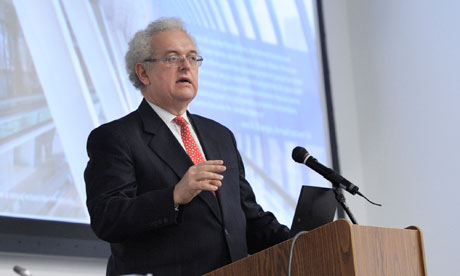
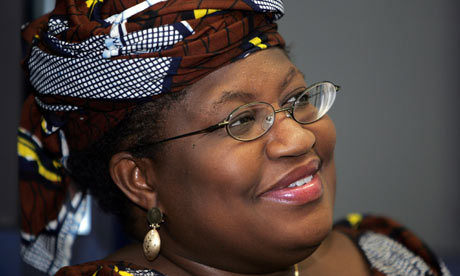
  • How do you think he stacks up against the competitors, Nigeria's Ngozi Okonjo-Iweala and Colombia's José Antonio Ocampo (also incredible, and many say better candidates)?
  • Should the U.S. be able to select the World Bank President?
  • If you were World Bank President, what would you change?
Let's discuss! Comment with your thoughts and opinions!